

Ecuador’s Skipjack Defying El Niño Expectations
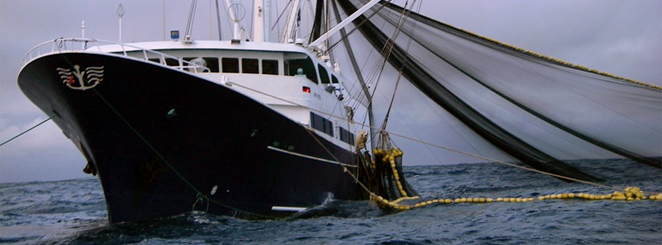
The Ecuadorian seiner fleet continues to report healthy skipjack catches by its national flagged vessels, as this year's cumulative volumes rise 13 percent in just one month, while many vessels are not fishing.
Following reports that the country’s first half skipjack landings had witnessed nearly a 40 percent increase YoY, catch remains solid, with even further significant surges throughout July.
Compared to the same period last year, Ecuador’s Jan-Jul skipjack catch is a substantial 33 percent higher. As the main catching fleet of this species in the EPO, this has been the major driver of a regional YoY climb of almost 27 percent in skipjack landings.
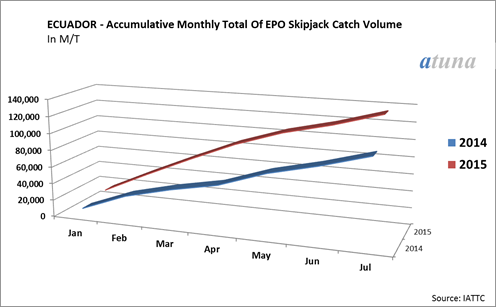
Despite earlier warnings and announcements of expected slower catch rates during recent months due to El Niño conditions, figures reported in the EPO by both the Ecuadorian fleet and other nations, indicate that no such impacts have yet been felt.
Recent predictions from NOAA give caution that El Niño has a 95 percent chance of sticking around throughout the winter, and only easing off during spring 2016.
Not all fleets in the region have been reporting higher skipjack catches however, with Nicaragua and Venezuela even noting landing declines year on year. Such figures have prompted some within the industry to question if certain fleets are over reporting to the IATTC. However, the regulatory body assured atuna.com that this definitely could not be the case.
William Bayliff of the IATTC explained that the Commission has staff members stationed in ports keeping a close eye on the activities of vessels, and also pointed out that there are IATTC or national observers on every trip of tuna purse seiners in the EPO with a fish-carrying capacity greater than 393 tons.
Ecuadorian-flagged seiners alone have accounted for more than 46 percent of the total commercial tuna catch in the EPO from Jan-July this year, according to IATTC stats. It’s the Mexican fleet that comes in second, representing just over 23 percent.
The EPO tuna purse seine fleet is still in the midst of the first fishing ban period implemented by the IATTC in the region annually. This initial stoppage of around 50 percent of the total fleet will last until September 28th.
The remaining vessels that did not cease operations during the first timeframe will then return to port by November 18th, to comply with the second closure period lasting until the same date in January. For the Ecuador fleet, the measures have meant that 53 seiners have been out of action during period A and 50 will stop fishing operations throughout period B.